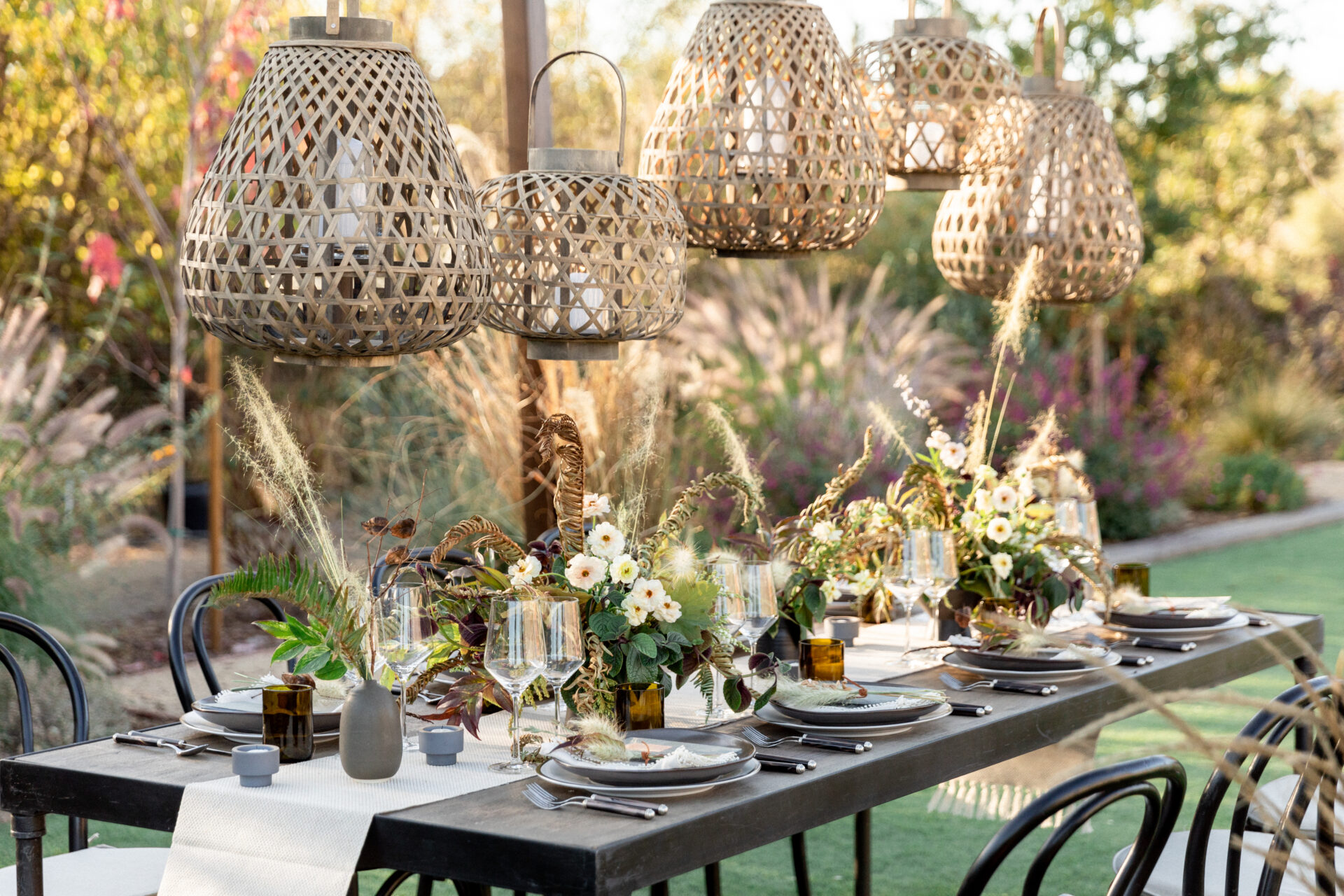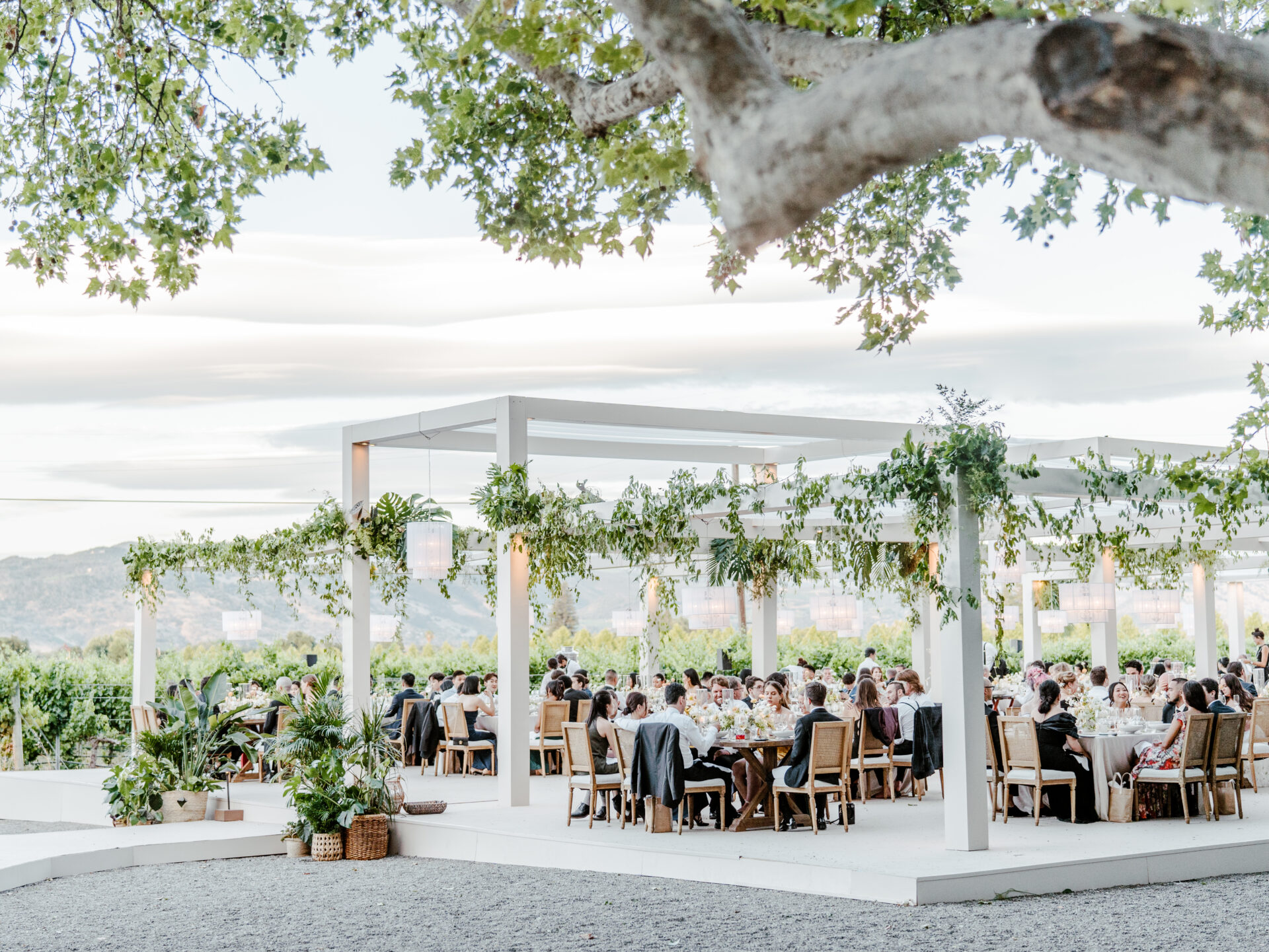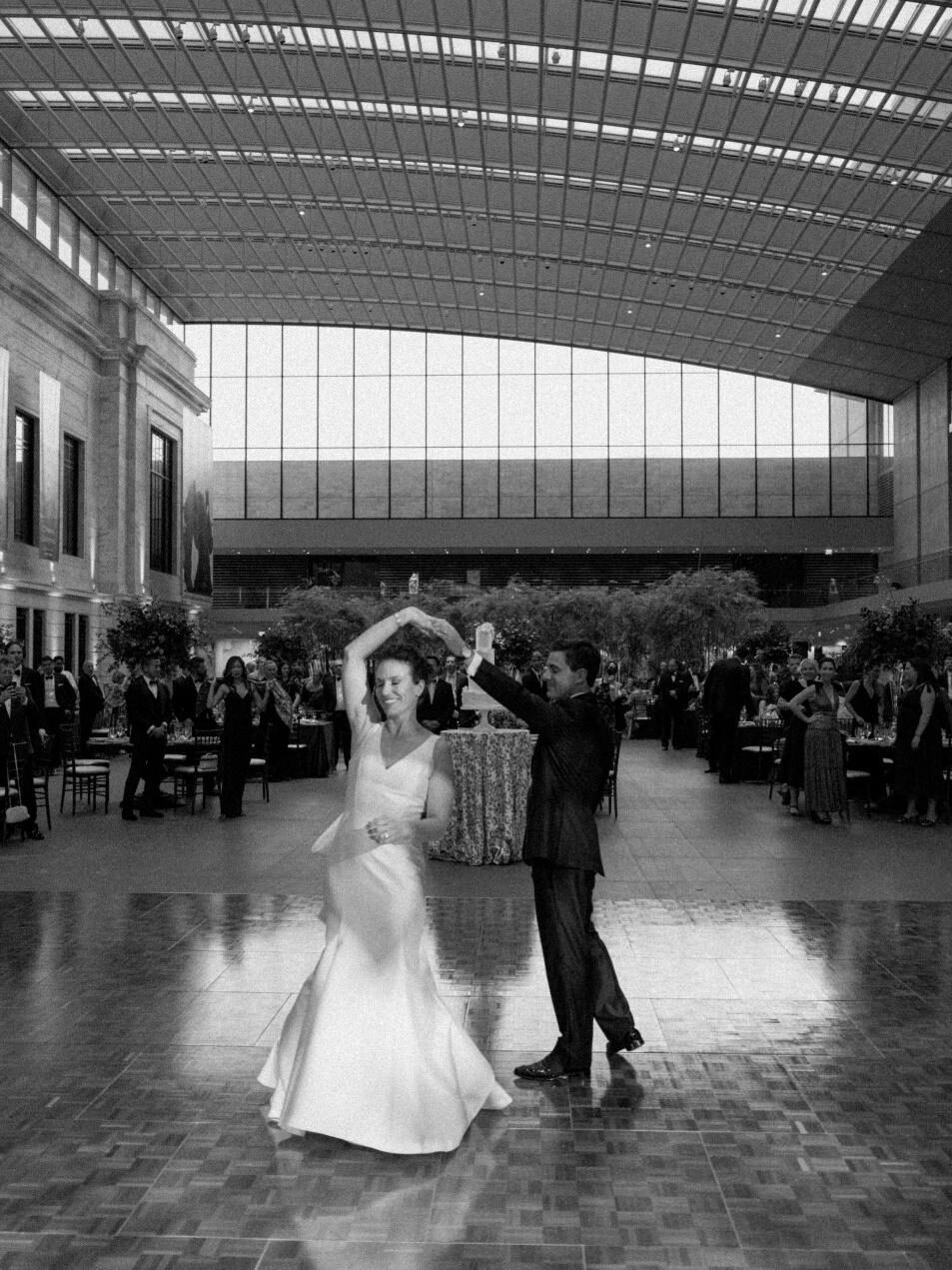
It’s time to move beyond the usual event spaces. Art galleries and museums offer something truly special: an unparalleled atmosphere of history, culture, and effortless sophistication. Choosing one of these institutions means your luxury wedding starts with an incredible backdrop. It’s a smart design move, blending high culture with a deeply personal celebration. However, a museum wedding comes with its own set of rules. It requires specialized event planning to navigate strict preservation etiquette, tricky logistics, and select the right creative partners. This is where our experienced wedding planners and consultants for weddings in Miami prove essential. This comprehensive guide will walk you through how to nail your design, perfect the guest experience, master the unique logistics, and find prime locations.
Why a Museum Makes a Chic, Modern Wedding Setting
One of the greatest perks of selecting a museum venue is how much visual work it does for you. These spaces are already about 90% decorated before you even start setting up. Think about the high ceilings, incredible architectural details, and the curated collections; they all provide a rich, ready-made atmosphere.
Opting for a museum inherently makes a statement. It shows your guests you appreciate culture, history, or modern design. This choice offers a wonderful opportunity: the chance to pair something deeply personal (your wedding) with something universally recognized and revered (the art). It creates an atmosphere that’s dynamic and memorable. For our team, whether we’re working as a wedding planning service that serves San Diego or operating as a wedding consultant serving Atlanta, the central factor we always keep in mind is that the museum’s primary purpose is preservation. This dedication to protecting the collection is what drives every decision we make regarding your luxury wedding, from the timeline to the approved decor.
Curating Your Design: Aesthetic Integration
When you design an event in a museum, the trick is to integrate your aesthetic beautifully. We’re designing with the collection, not trying to compete with it.
Color and Palette Strategy
Your color palette can be neutral or perfectly complementary to the permanent exhibits. For example, using deep, saturated jewel tones can provide subtle depth and contrast against classic white walls or marble flooring. The goal is simple: the existing art should remain the star, and your decor should frame the surroundings.
Lighting Design
Lighting is everything, especially for an after-hours event. Since museums often restrict high-heat fixtures or intense beams near delicate exhibits, focused lighting is essential. We use specialized uplighting and pin-spotting to highlight architectural features and illuminate specific areas of the reception. Open flames are usually off-limits due to preservation requirements, so wedding planners rely on modern, high-quality alternatives. Think professional-grade LED candles, subtle string lights, and custom projected gobos to create warmth, texture, and a dramatic atmosphere that respects the institutional setting.
Florals and Greenery
Museums have strict contamination protocols, so creative partners in floral design must be mindful. This means we commonly avoid overly fragrant, heavily shedding, or insect-attracting plants. Instead of relying on traditional cascading pieces, we favor contemporary, structured arrangements. Modern Ikebana or monochromatic installations often work best because their sculptural quality makes them look like they belong in a gallery space.
Table Settings and Linens
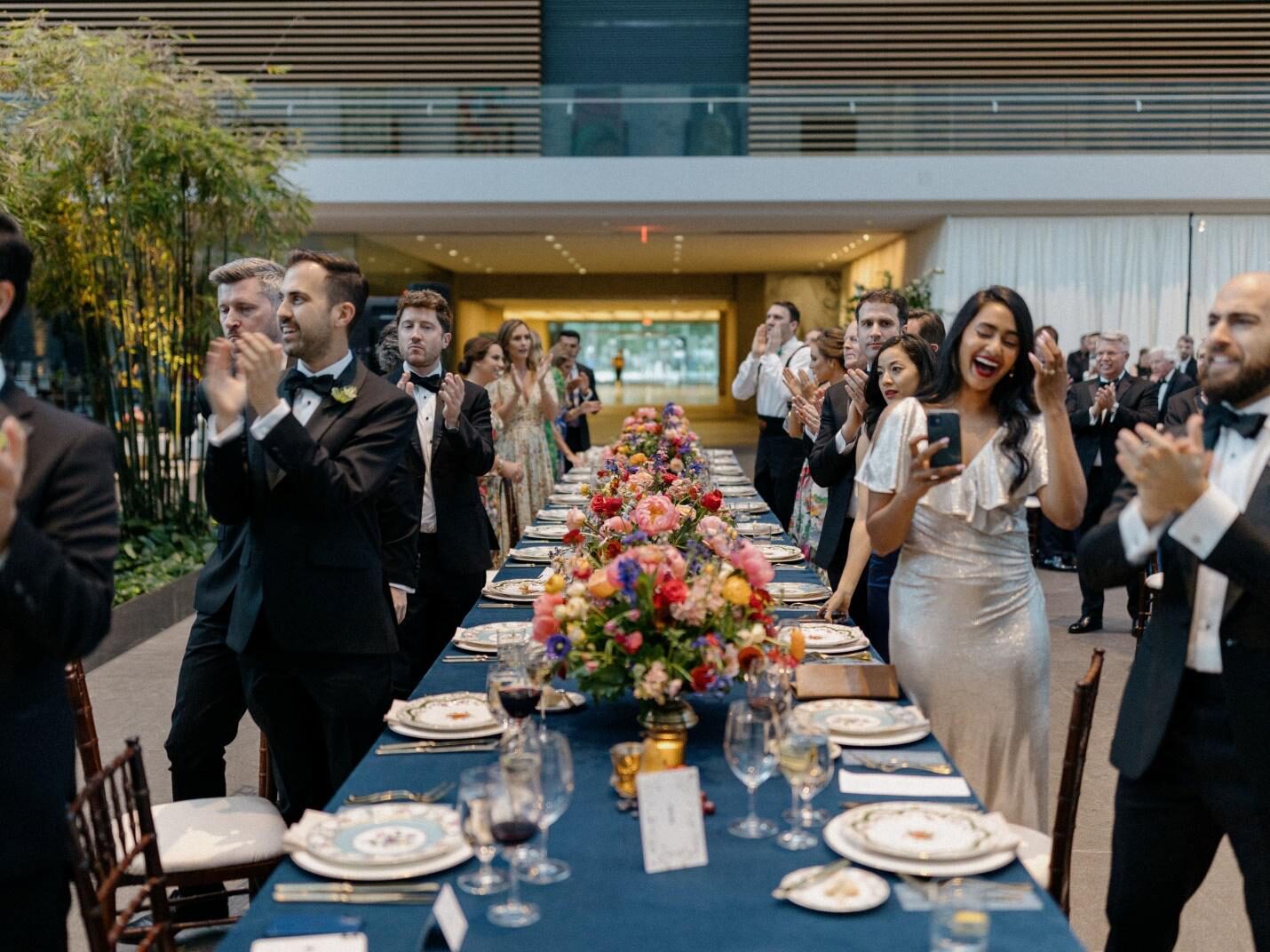
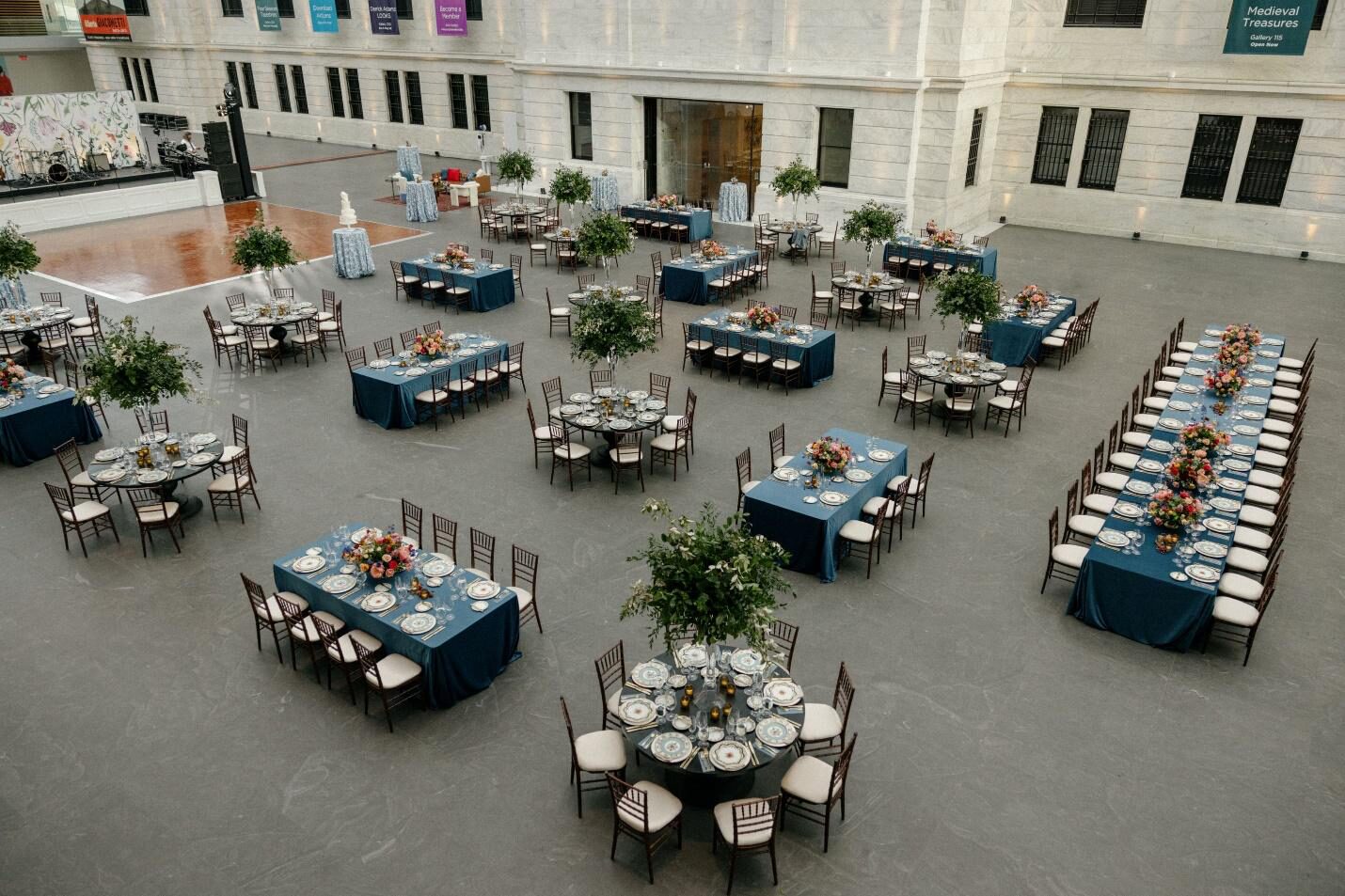
When designing your tabletops, embrace the clean lines of the venue. The minimalist approach works best here: clean lines, modern place settings, and skipping excess clutter. The focus shifts to tactile quality and material. Utilizing beautiful textures like velvet, silk, or high-end matte finishes adds necessary depth to the museum wedding without using loud patterns.
The Flawless Guest Experience
The guest experience in a museum is inherently different—and more immersive—than in a traditional space. You’re not just throwing a party; you’re inviting guests to interact with culture.
Immersive Atmosphere and Exploration
Use the unique environment to your advantage. If the venue allows, encourage controlled exploration. For example, hosting the cocktail hour in a gallery space lets guests enjoy the curated works before the main event begins. This built-in entertainment elevates the social hour, turning a transition period into an interactive experience. Wedding planners and consultants for weddings in Nashville and Austin know this level of detail requires detailed coordination with the museum staff to ensure guests can move freely while respecting all barriers and preservation rules.
Acoustics and Sound Control
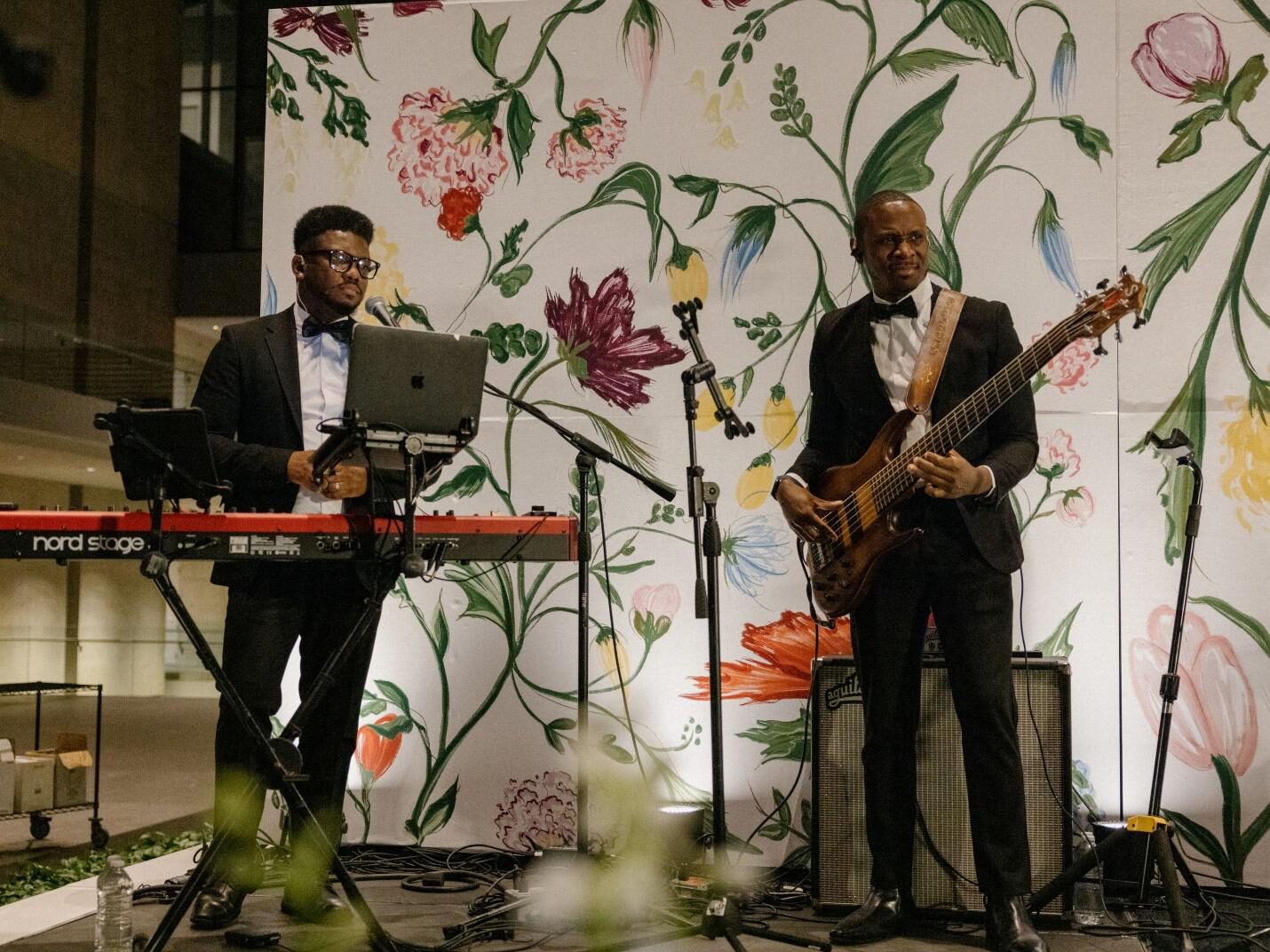
Museums are typically defined by hard surfaces, high ceilings, and stone floors, which can be acoustically challenging. To ensure clear sound for toasts and comfortable background music, you need an expert sound engineer. They can mitigate echo and reverberation with strategically placed speakers and sound panels. Furthermore, museums often have strict decibel limits to protect artifacts from vibration. A good event planning team will coordinate a comprehensive sound check well in advance and monitor levels throughout the night to ensure compliance without sacrificing the celebratory energy.
The Food and Beverage Protocol
Food and drink service requires careful strategy in a museum. Most venues have tight rules about what can be served and where. The biggest logistical hurdle is often red wine, due to the high risk of staining floors and materials.
Many institutions either restrict it entirely or require strict service parameters. Similarly, open beverages and food service must be kept at a safe distance from all exhibits. The necessity of using a museum-approved, high-end caterer is paramount. Your creative partners for catering must be experienced in working with these restrictions, using designated prep areas, and executing a sophisticated service flow that minimizes risk to the collection.
Timeline Precision and Load-Out
One of the most non-negotiable aspects of a museum wedding is the timeline. Because museums operate as public institutions during the day, your setup often cannot begin until after public closing, usually around 5:00 or 6:00 PM. This compressed schedule requires military-grade precision from your wedding consultant serving Atlanta or whichever location you choose. Everything, from catering deliveries to floral installations, must be managed down to the minute. Similarly, the breakdown and load-out often have a sharp deadline (often 1:00 AM) to prepare the space for the next public day. A tight, detailed, and realistic schedule is the foundation of a successful museum event.
Logistics of a Museum Wedding
Navigating the non-negotiables is key to ensuring a smooth, compliant event that protects the priceless assets around you.
The Critical Creative Partner Team
The high likelihood is that the museum will require you to select from a pre-approved list of creative partners for liability reasons. Your caterer and wedding planners will have prior experience working in similar museum environments. They understand the rigorous load-in and load-out rules, which typically involve strict time constraints, designated entry points, and the required use of padded dollies and specialized equipment. This experience ensures the protection of the space and your time.
Security and Liability
Expect that dedicated museum security and art handlers will be mandatory throughout the event. This required staffing is essential for preservation and is a necessary factor to include in your financial picture. Furthermore, your contract will contain explicit liability clauses regarding any damage to exhibits or the building structure. Having experienced event planning professionals manage the logistics minimizes this risk and allows you to enjoy the night worry-free.
Guest Etiquette and Communication
Since the surroundings are unique, guest communication is important. You’ll need to politely communicate the standard “no-touch, no-flash” policy for the exhibits. This can be done subtly through your wedding website, refined signage, or a brief, friendly announcement from your wedding organizers. It’s also vital to clearly mark designated zones where food and drinks are permitted versus areas near priceless artifacts. Guests should always feel welcome, but the collection’s safety must come first.
Curated City Spotlight: Prime Museum Wedding Locations
To spark inspiration, here are a few cities where the museum scene offers truly iconic luxury wedding venues:
Miami, Florida (Modern Chic & Vibrant)
The Miami arts scene is defined by modern architecture, vibrant color, and coastal energy. Venues like the Pérez Art Museum Miami (PAMM) offer dramatic architecture and stunning water views, while Vizcaya Museum & Gardens provides a completely different historical aesthetic, with European architecture meeting tropical flair. A wedding planning service that serves Miami, like Emily Coyne Events, can help you blend the city’s bright energy with the museum’s sophisticated lines.
San Diego, California (Coastal Culture & Balboa Park)
San Diego’s cultural heart is Balboa Park, where you can find stunning Spanish Colonial Revival architecture and historical charm. Venues like the San Diego Museum of Art or the Museum of Contemporary Art San Diego (MCASD) offer incredible coastal light, grand courtyards, and a truly refined backdrop that celebrates Californian history and culture.
Washington D.C. (Monumental & Classic)
D.C. is home to monumental institutions defined by neoclassical architecture, marble columns, and a sense of federal importance. The National Museum of Women in the Arts (NMWA) or the awe-inspiring National Building Museum are examples of spaces that offer gravitas and scale. Wedding planners and consultants for weddings in DC often travel for these landmark events, bringing their expertise to coordinate the complexity of these high-profile, classic venues.
If you’re dreaming of a museum wedding in any other city, our destination wedding experts are here to guide you every step of the way.
Planning an After-Party (If the Museum Has an Early End Time)
The tight timelines associated with museum logistics mean that your main reception will often end earlier than a traditional wedding. To keep the energy flowing and honor your guests’ festive mood, a well-planned after-party is essential.
The after-party provides a seamless, high-energy transition that shifts the mood from formal event to casual celebration. It also simplifies the museum load-out, as most guests depart on the planned shuttles.
Nearby Options: Location is Everything
Proximity to the museum and the main guest hotel is non-negotiable. Guests won’t want to travel far late at night.
- Rooftop Bar or Lounge: This is the most popular and chic option. It provides a change of scenery, often with stunning city views, and maintains the sophisticated vibe of the wedding.
- Private Restaurant Buyout: Taking over a stylish, late-night restaurant or cocktail bar allows you to curate the menu (think gourmet late-night snacks) and control the atmosphere completely.
- Hotel Bar with Late-Night Hours: If your wedding block is at a high-end hotel, reserving a section of the lobby bar or their private event space is the most convenient option, ensuring minimal travel for most attendees.
Seamless Transportation
The transportation plan should be simple, clear, and efficient.
- Coordinated Shuttles: Arrange a shuttle loop from the museum exit directly to the after-party venue and then continuing to the main hotel after the after-party concludes.
- Rideshare Plan: If using rideshare, have your wedding consultant organize designated pickup zones and provide clear signage. Offering guests a personalized rideshare code for the trip is a nice, modern touch.
After-Party Styling and Vibe
Keep the vibe fun and relaxed—it should feel like the relief valve after a formal event.
- Focus on Comfort: Prioritize comfortable seating (lounge furniture, high-top tables) over formal dining setups.
- Lighting and Music: Lower the lighting and let the music take center stage. This is the place for high-energy songs and strong drinks.
- Food: Stick to easy-to-eat, late-night favorites: sliders, tacos, pizza, or a fancy donut wall. Guests are there for the social energy and the fun, not another formal meal.
Timeline for Planning a Chic Museum Wedding
Here’s a realistic planning timeline to keep things on track:
12–18 Months Out
- Tour museums
- Review restrictions and policies
- Secure your date
- Begin creative partner selections
10–12 Months Out
- Lock in catering
- Begin design concepts
- Create guest list and hotel block
6–9 Months Out
- Plan lighting strategy
- Build reception layout
- Finalize entertainment
3–6 Months Out
- Refine timeline
- Review insurance and compliance documents
- Confirm gallery access
1–2 Months Out
- Final walkthrough
- Rehearse load-in with creative partners
- Provide final guest count
Wedding Week
- Timeline confirmations
- Security and compliance checks
- Vendor access passes
A museum wedding gives you an unmatched, elegant setting, but executing it flawlessly requires a planning team with a specific set of skills. We specialize in coordinating events in these unique institutional spaces. Our process is simple: we handle all the non-negotiable details—from managing vendor compliance and art security to designing around tight load-in windows—to guarantee a seamless flow. We manage the detailed operational side so you can simply relax and enjoy the magic of celebrating in such a gorgeous and protected environment.
If you want support from a wedding planning service that serves NYC, Austin, and other cities, like Emily Coyne Events, we’re here to guide every detail. As a wedding consultant, we help you create a museum wedding that feels polished, personal, and exceptionally well-executed. Let’s build a celebration that makes the most of your venue’s character — and gives your guests an experience they’ll remember. Contact us today.